So…you hired an agency. You went through the process. You got a new logo, a new website, maybe a full brand overhaul.
Fast forward a few months…and the same problems are still there.
Your messaging is still inconsistent. Your team still explains the business differently depending on who's speaking. And somewhere in the back of your mind, you're already wondering if the site needs another pass.
If that sounds familiar, you're not alone. But it is worth understanding why the rebrand didn’t fix anything.
In the video below, I explain why your rebrand may not have worked (or will not work). Feel free to watch or scroll down to read more.
The rebrand was solving the wrong problem.
In today’s context, it only makes sense why many people who “rebrand” are disappointed.
Artificial Intelligence is frankly only getting “better” at design
Design subscriptions offer fast and unlimited designs
Creative marketplaces offer thousands of templated solutions
Freelance marketplaces such as Fiverr and 99designs allow organizations to hire more affordable designers
In my experience, the issue that I have seen comes down to this:
This context has forced “rebrands” to be only associated with a visual change.
How do we want to look? What’s “the vibe?” What colors should we use?
Now don’t get me wrong: I am a designer myself, so of course I understand the power of design and how it can be a viable solution for change. My point is not that logo design isn’t important. My point is that I believe we have reduced the depth and meaning of the branding process.
I’m worried that we are missing something when we only offer a new visual identity, updated messaging, or a cleaner website.
The problem is that the conditions that triggered the rebrand in the first place aren't always visually driven.
The messaging confusion, the positioning drift, the team operating in silos — those might be deeper structural problems.
And you can't solve a structural problem with a visual solution.
I believe brand has always been tied to two things: relationship and reputation.
And the common thread running through both of them isn't a visual. It's people. It's story.
Brand is a living ecosystem that evolves as the business evolves. When we reduce it to aesthetics, we skip the part that actually matters.
What's actually happening: Identity Drift.
There's a name for what most businesses experiencing this are going through. I call it Identity Drift.
Identity Drift is the slow, silent gap that opens between who a business is becoming and how it's showing up in the world. The business evolves over time. The offers change. The thinking matures. The team grows. But the brand, the story being told externally lags behind.
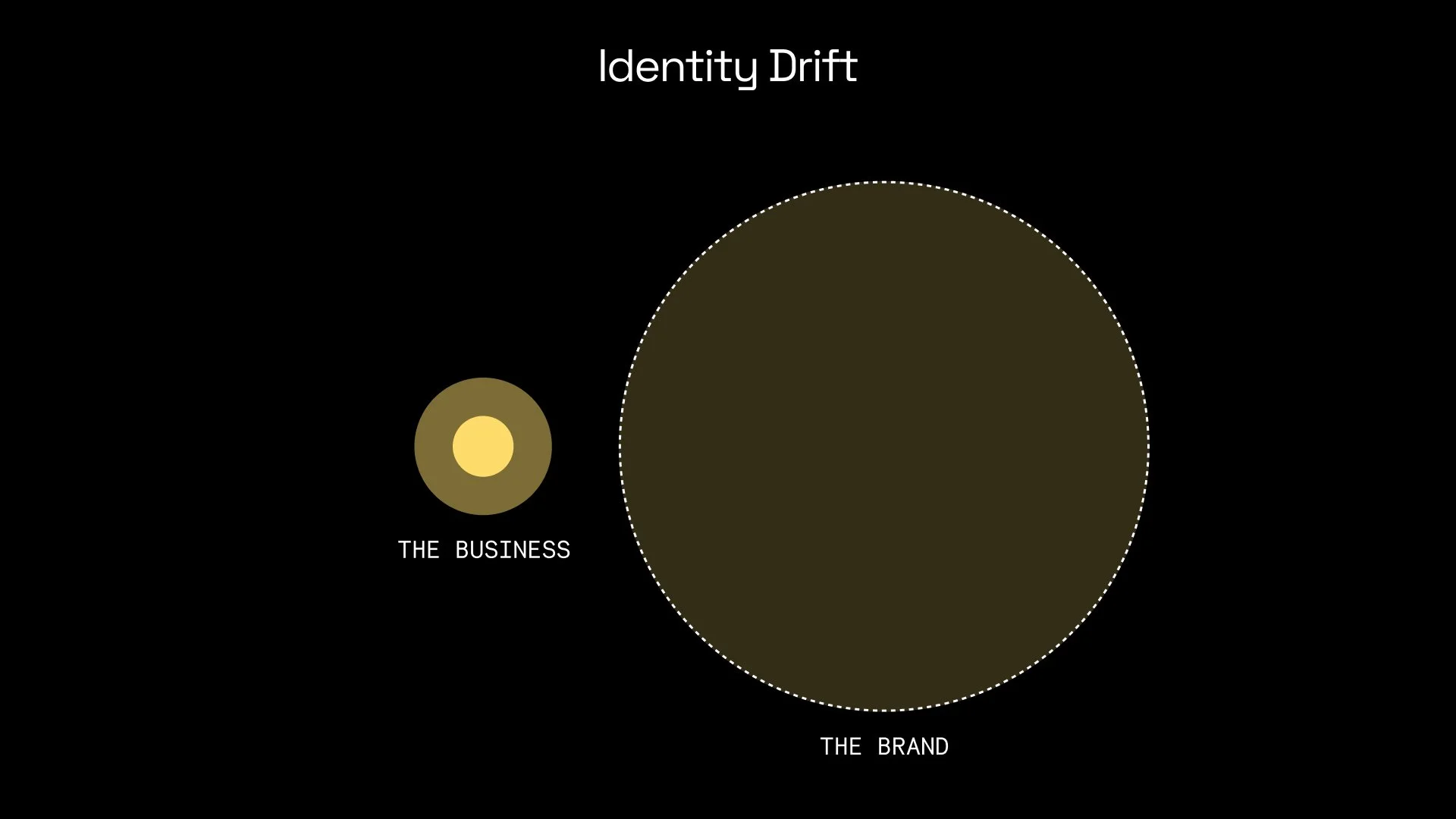
Identity Drift by Freddy Castro
That mismatch shows up everywhere:
The website that doesn't quite convert
The sales pitch that requires more explanation than it should
The team that has no clear direction from leadership.
The rebrand didn't work because it only addressed how the business looked, not the gap between who the business has become and how it's still presenting itself. The visual identity is where Identity Drift becomes visible. It is not where it starts.
Two signs this is what happened to you.
Your brand reflects a previous version of the business.
Maybe you started 10 years ago and just haven’t touched anything since you’ve grown. Maybe your team just went through a major transition and it is time to start fresh.
You’re not quite sure what the problem is, but what you know is that you are not the same organization you were before–and your brand ecosystem definitely doesn’t reflect that.
Maybe you might not even be able to name it precisely. You just know everything just feels off.
The visual fix didn't fix anything.
Let’s say that you did go through the rebrand or brand refresh. However, you’re noticing that the surface-level changed, but nothing else did.
Maybe it even looked a lot better, cleaner, and professional. But you feel like the same confusion still exists for your clients, your team, maybe even for yourself.
That's the tell. If the root condition had actually been addressed, those conversations would have changed.
What will it take to fix it?
The answer isn't a better agency, more budget, or a longer brand sprint.
It's definition before expression.
Before you build anything, you start with the structural questions first: who are we, actually, right now? What is true about this business that isn't being expressed yet? What's the gap between our internal reality and our external story?
When you get that clarity first, then the visual identity, the website, the messaging will all flow from something tangible and real. That's how you close the gap between who you are and how you're actually showing up.
Not sure where your gap is?
If you’re unsure of where to start, I’d encourage you to download our free Identity Drift Diagnostic. This is a free self-assessment that walks you through the eight observable signs that your brand has outgrown your business. You'll know exactly where the drift is happening and what it would take to close it.